

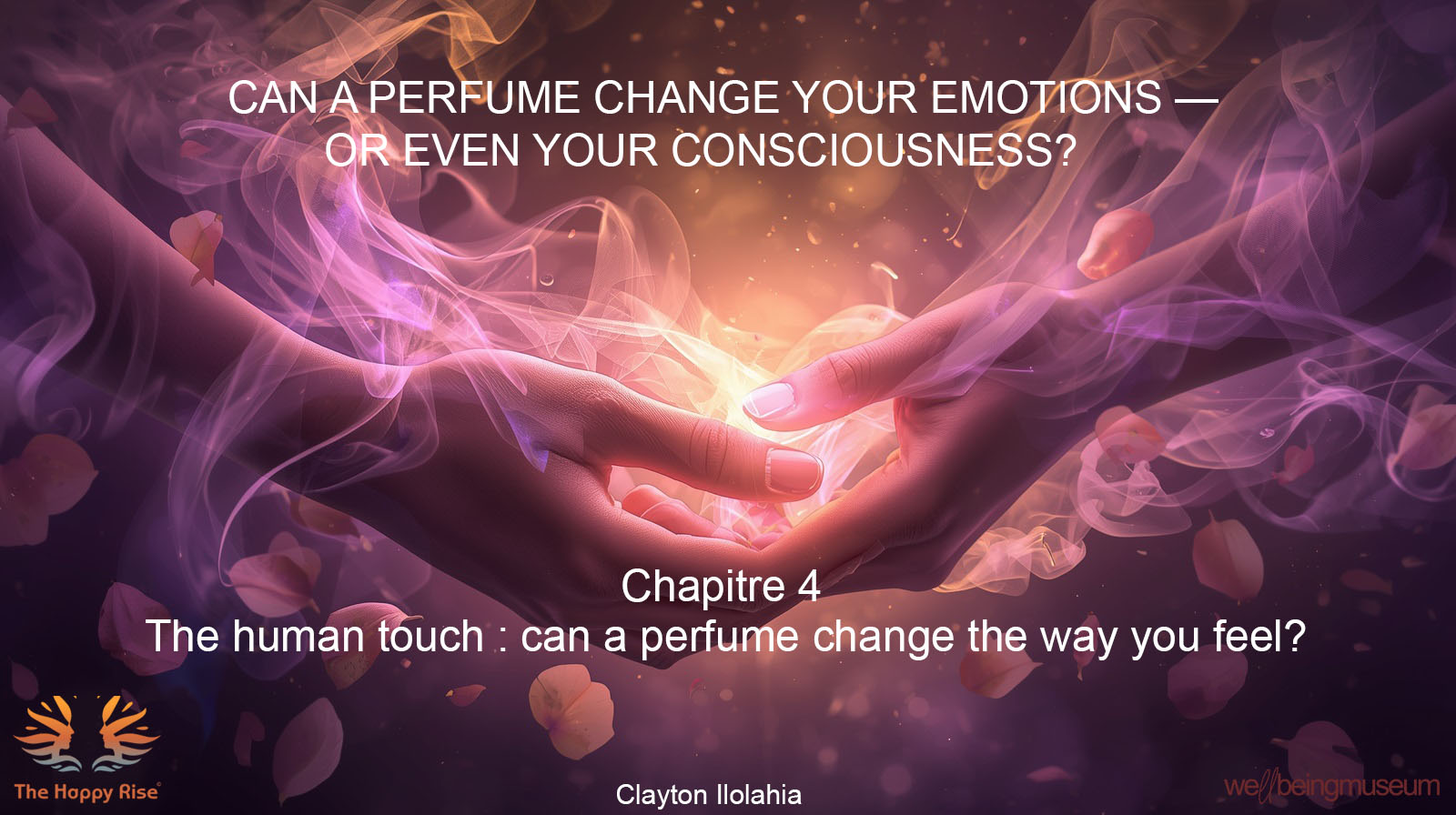
There is a particular kind of exhaustion that comes not from doing too much, but from being too available. The accelerating cycle of social media — the constant production, consumption, and performance of content — has quietly reshaped not just the fragrance industry, but the texture of daily life itself. And a growing number of people, sensing this, are beginning to make a different choice. Not a dramatic withdrawal, but a deliberate reorientation: toward fewer, deeper connections. Toward the people physically present in their lives. Toward a quality of attention that the digital world, for all its reach, simply cannot replicate.
Choosing to step off the machine
This shift matters profoundly for well-being. The relationships we build in physical proximity — with friends, family, and community — carry a warmth that no digital interaction can fully substitute. Social well-being, at its most fundamental, is rooted in presence. In shared meals, in unhurried conversation, in the simple experience of being in the same room as someone who matters to you. Recognizing the cost of perpetual digital availability — and choosing, consciously, to invest more in the real — is one of the most meaningful acts of self-care available in contemporary life.
In a world of infinite content, presence has become the rarest luxury of all
The fragrance world reflects this tension in its own particular way. A market driven by weekly launches and algorithm-friendly content is a market optimized for speed and novelty — not for depth or genuine emotional well-being. The individual who steps back from that cycle, who chooses a scent slowly and for personal reasons rather than because it is trending, is doing something quietly radical. They are insisting that their relationship with fragrance — like their relationships with people — deserves more than a fleeting moment of attention.
Artificial Intelligence and the limits of imitation
The arrival of artificial intelligence in the creative industries has prompted the same mixture of excitement and unease in perfumery that it has everywhere else. In an industry already moving faster than most of its participants are comfortable with, any tool that promises to accelerate production further will find willing adopters. But the reality of working with artificial intelligence in a genuinely creative context is more complicated than the promise suggests.
What technology can accelerate — and what only human creativity can actually produce
The quality of what any AI system produces is entirely dependent on the quality of what goes into it. It can reference, recombine, and optimize. What it cannot do is discern — cannot feel the difference between a formula that works technically and one that actually moves a person emotionally. That gap between competence and genuine creative intelligence is not a minor limitation. It is the entire point. For professional well-being and intellectual well-being alike, work that engages the full depth of human creative capacity produces something automation cannot replicate — not just a better result, but a more nourishing experience for the person doing the creating.
There is, perhaps, reason for cautious optimism. Markets tend to swing. The culture that rushed headlong into speed and automation often eventually generates its own countermovement — a renewed appetite for the handmade, the slow, the genuinely skilled. If that countermovement reaches fragrance fully, it will not be a retreat. It will be a recognition that some experiences cannot be manufactured. They require a human being with real judgment, real sensitivity, and the patience to reach for something worth making.
The scent of your happiest moments
When the question turns to joy — to what fragrance might actually express or evoke happiness — the answer, perhaps surprisingly, is not a list of ingredients. It is a question turned back toward the person asking. When was the last time you felt genuinely joyful? What were the most important moments in your life when happiness felt complete and uncomplicated? Those moments, examined closely, almost always carry a sensory dimension that is easy to overlook.
The exercise is simple but quietly powerful. Recall a moment of real happiness — a vacation, a celebration, an ordinary afternoon that somehow felt extraordinary. Then try to describe not just what happened, but the environment around it. What did it smell like? It does not need to have been a beautiful or sophisticated scent. The smell of salt air, of a particular food, of warm dust rising from a sun-baked street — any of these, anchored to a moment of genuine joy, carries an emotional charge that no artfully composed fragrance can manufacture from scratch.
Joy is not a fragrance family — it is a memory waiting to be unlocked
Once those olfactory memories are identified, they can be revisited. Recreating the conditions that once produced joy — including, deliberately, the smells associated with it — is one of the most direct paths available to general well-being. Not as nostalgia, but as an active practice: using the ancient, memory-linked power of smell to return, even briefly, to the emotional state you most want to inhabit.
Joy, it turns out, already has a scent. You just have to remember what it is.
This article was inspired and written following an enriching exchange with Clayton Ilolahia
Related Post
Quand la suradaptation t’éloigne de toi-même avec Sophie Deligiannis | Episode 39 – Chapitre 1
Bienvenue dans cette nouvelle série consacrée à un sujet
Vivre, créer, rêver : le corps, les mains et l’amour de soi pour apprendre le bonheur avec Fanfan Delarose | Episode 39 – Chapitre 3
Vivre, créer, rêver : les verbes qui nous apprennent
Lalie
9 juin 2026 at 9h02J’adore cette approche de la parfumerie slow. Choisir un parfum pour soi, loin des tendances TikTok ou des lancements effrénés, c’est presque un acte de résistance. Magnifique parallèle entre nos relations et notre rapport aux odeurs.