



The modern workplace has changed dramatically over the last few years. Employees are facing increasing pressure, higher workloads, and growing expectations to perform at their best. At the same time, organisations are dealing with challenges such as employee burnout, disengagement, talent shortages, and declining workplace satisfaction.
As a result, workplace wellbeing has become a business priority rather than simply an employee benefit. Organisations looking to create healthier workplace cultures can benefit from the wellbeing resources and leadership insights available through The Happy Rise.
Companies that invest in employee wellbeing are discovering that healthier and happier employees are more engaged, productive, creative, and committed to organisational success. However, creating a thriving workplace requires more than free coffee, wellness apps, or occasional team-building activities.
True workplace wellbeing starts with culture, leadership, and a genuine commitment to supporting people.
What Is Workplace Wellbeing?
Workplace wellbeing refers to the overall physical, mental, emotional, and social health of employees within an organisation. It focuses on creating an environment where people feel supported, valued, and empowered to do their best work.
A successful employee wellbeing programme helps organisations:
- Improve employee satisfaction
- Reduce workplace stress
- Increase productivity
- Strengthen team relationships
- Improve employee retention
- Support mental and emotional health
When employees feel cared for, they are more likely to contribute positively to the organisation and remain motivated over the long term.
Why Employee Wellbeing Matters More Than Ever
Many organisations are experiencing higher levels of workplace stress than ever before. Fast-paced environments, digital overload, economic uncertainty, and changing work patterns have created new pressures for employees.
Without proper support, these pressures can lead to:
- Burnout
- Reduced engagement
- Absenteeism
- Low morale
- Higher staff turnover
An effective corporate wellbeing programme helps organisations address these challenges proactively rather than reacting when problems become serious.
Research consistently shows that businesses with strong wellbeing cultures often experience higher employee engagement, better customer service, stronger collaboration, and improved organisational performance.
Simply put, when employees thrive, businesses thrive.
The Growing Importance of Happiness at Work
Happiness at work is often misunderstood. It does not mean employees are happy every minute of every day. Instead, it refers to creating conditions where people feel purposeful, valued, connected, and motivated.
Employees are more likely to experience workplace happiness when they:
- Understand the purpose of their work
- Feel recognised for their contributions
- Trust their leaders
- Have opportunities for growth
- Experience psychological safety
- Maintain a healthy work-life balance
An employee happiness programme can help organisations create these conditions by focusing on wellbeing, communication, recognition, and personal development. Businesses looking for practical workplace wellbeing strategies can explore the tools and insights available through The Happy Rise wellbeing community.
Happy employees are more likely to stay with an organisation, contribute new ideas, and support a positive workplace culture.
Why Conscious Leadership Matters
One of the biggest mistakes organisations make is treating wellbeing as an employee issue rather than a leadership responsibility.
Conscious leadership is the practice of leading with self-awareness, empathy, authenticity, and purpose. Leaders who want to deepen these skills and continue their personal growth journey can access additional learning experiences through the The Happy Rise Member Space.
Conscious leaders understand that their behaviour directly influences workplace culture and employee wellbeing.
Rather than focusing solely on targets and performance metrics, conscious leaders prioritise:
- Trust and transparency
- Active listening
- Emotional intelligence at work
- Meaningful communication
- Employee development
- Psychological safety
When leaders demonstrate genuine care and empathy, employees feel more supported and engaged.
The most successful wellbeing initiatives are often those led by leaders who actively model healthy behaviours themselves.
Emotional Intelligence at Work: A Key Leadership Skill
Emotional intelligence at work plays a vital role in creating healthy and productive workplaces.
Emotionally intelligent leaders can:
- Understand their own emotions
- Manage stress effectively
- Build stronger relationships
- Resolve conflicts constructively
- Communicate with empathy
- Support employee wellbeing
Employees are more likely to trust leaders who demonstrate emotional intelligence and genuine concern for their wellbeing.
Developing emotional intelligence can improve leadership effectiveness while strengthening workplace culture and team performance. Organisations seeking to develop more conscious and emotionally intelligent leaders can explore additional resources through The Happy Rise.
How to Prevent Burnout Before It Starts
One of the biggest challenges facing organisations today is burnout.
Burnout is more than feeling tired after a busy week. It is a state of chronic physical and emotional exhaustion that can affect performance, wellbeing, and overall quality of life.
Learning how to prevent burnout should be a priority for every organisation.
Common warning signs include:
- Persistent fatigue
- Reduced motivation
- Increased irritability
- Difficulty concentrating
- Emotional exhaustion
- Decreased job satisfaction
Organisations can reduce burnout risk by:
Encouraging Healthy Boundaries
Employees need time to recover and recharge. Encouraging breaks, annual leave, and healthy working hours supports long-term wellbeing.
Providing Burnout Prevention Training
Burnout prevention training helps employees identify early warning signs and develop practical strategies to manage stress effectively.
Creating Supportive Leadership
Leaders play a critical role in recognising when employees may be struggling and offering support before burnout develops.
Promoting Open Communication
Employees should feel comfortable discussing workload challenges and wellbeing concerns without fear of judgement.
Workplace Wellbeing Ideas That Actually Work
Many organisations want to improve wellbeing but are unsure where to start. The most effective wellbeing at work ideas focus on creating meaningful cultural change rather than temporary initiatives.
Practical workplace wellbeing strategies include:
- Regular wellbeing check-ins
- Leadership coaching programmes
- Flexible working arrangements
- Mental health awareness workshops
- Employee recognition programmes
- Personal development opportunities
- Team volunteering initiatives
- Mindfulness and resilience training
Small, consistent actions often have a greater impact than large one-off events.
The Role of a Wellbeing Consultant
As workplace wellbeing becomes increasingly important, many organisations seek support from a wellbeing consultant.
A wellbeing consultant can help businesses:
- Assess workplace wellbeing needs
- Develop tailored wellbeing strategies
- Design employee wellbeing programmes
- Improve engagement and culture
- Measure wellbeing outcomes
- Support leadership development
Similarly, a workplace culture consultant helps organisations identify cultural challenges and create healthier, more supportive working environments.
External expertise can provide valuable insights that accelerate positive change and improve long-term results.
Continue Your Workplac
e Wellbeing Journey
Creating healthier workplaces requires more than policies and programmes. It requires conscious leadership, personal growth, emotional intelligence, and a commitment to helping people thrive.
The Happy Rise provides access to wellbeing resources, leadership insights, workshops, learning experiences, and transformational tools designed to help individuals and organisations flourish.
Creating a Workplace Where People Flourish
The future of business success depends on people. Organisations that invest in workplace wellbeing, conscious leadership, and employee happiness are better positioned to attract talent, retain employees, and build resilient teams.
Creating a thriving workplace is not about implementing a single wellbeing initiative. It is about building a culture where people feel valued, supported, and empowered every day.
By prioritising employee wellbeing programmes, developing emotionally intelligent leaders, supporting burnout prevention, and creating positive workplace cultures, organisations can create environments where both people and performance flourish.
When wellbeing becomes part of everyday business practice, everybody benefits.
Related Post
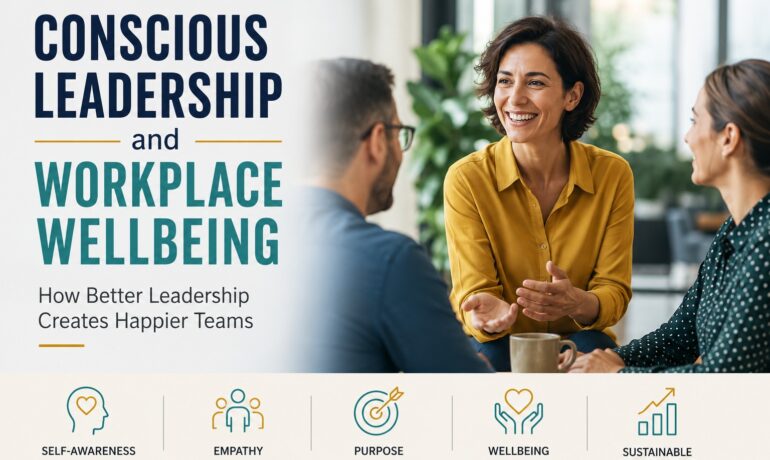
Conscious leadership and workplace wellbeing: How better leadership creates happier teams
In many organisations, workplace wellbeing is treated like a