

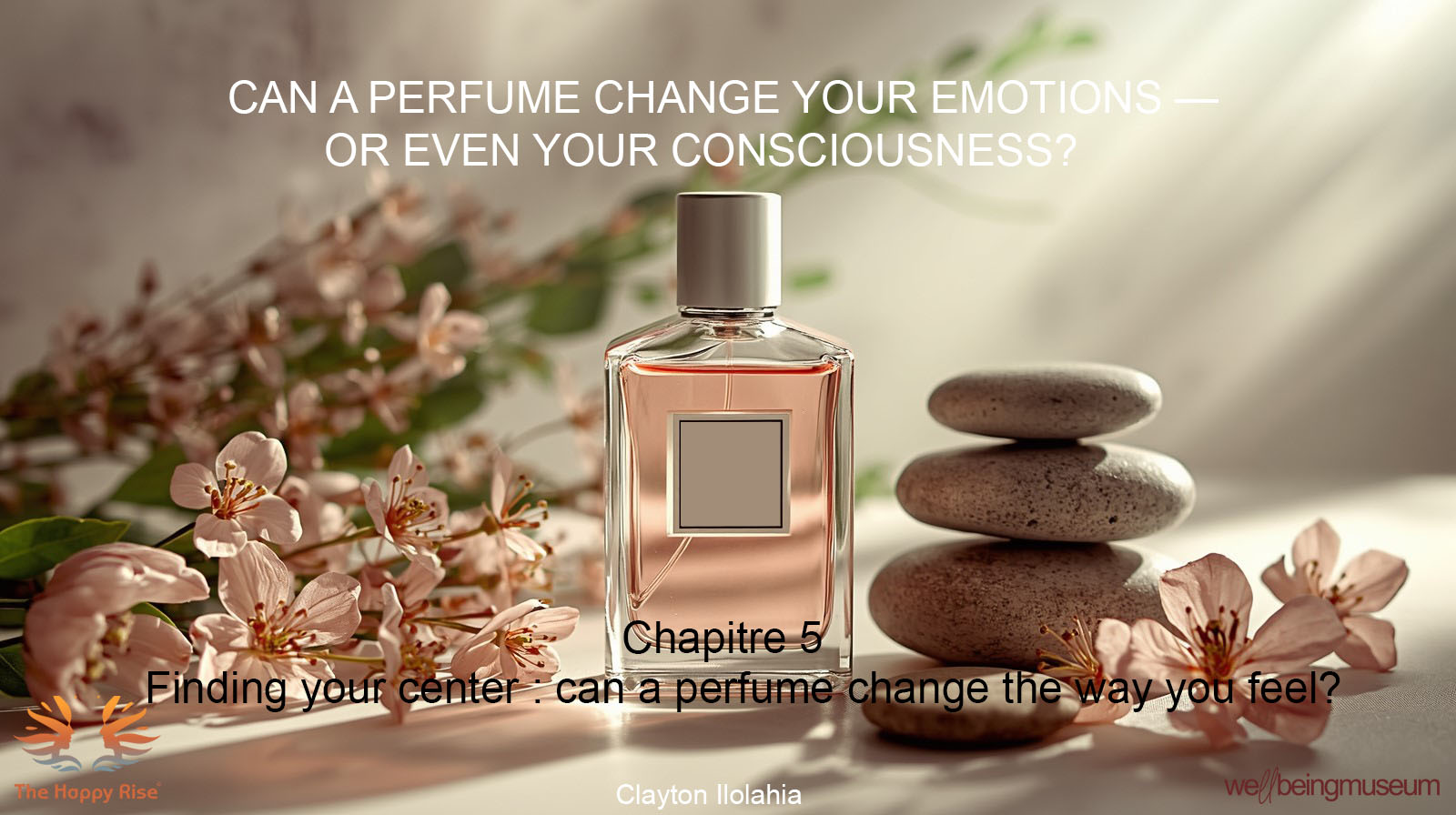
Joy, when traced back to its sensory roots, turns out to be surprisingly specific. Not a mood category, not a fragrance family, but a precise and personal collection of impressions that the body has quietly archived over a lifetime. For one person, it lives in the warm, creamy depth of sandalwood — a scent encountered once, early, that immediately felt like arriving somewhere familiar. A home base, in the most literal olfactory sense. Something the nose returns to not out of habit, but out of genuine recognition. That kind of deep, instinctive affinity is not random. It is the accumulated emotional weight of every positive association the scent has gathered over years of being present during moments that mattered.
The scent of joy is personal
For others, joy arrives in the form of white flowers — orange blossom, jasmine, tuberose — fragrances that carry a particular quality of innocence and purity that is difficult to articulate but immediately felt. There is something in their clarity, their lack of complexity, that connects to a simpler emotional state. A state less burdened by the demands of adult life, less shadowed by the accumulated pressures of responsibility and obligation. Whether that connection is rooted in childhood memory, in cultural association, or in something more instinctive still, the effect on well-being is real. These floral notes do not merely smell pleasant. They restore something — a sense of inner cleanliness, of lightness, of the self returned to its most essential form.
There is no universal formula for happiness — only the one your own memory has already written
This points to something important about the relationship between fragrance and general well-being. The ingredients that support joy are not the same for everyone, and no expert, however experienced, can prescribe them from the outside. What can be done is to create the conditions for self-discovery — to ask the right questions, to pay attention to the body’s responses, and to trust that the nose knows things the mind has not yet found words for. Intellectual well-being grows in exactly this space: in the curious, patient exploration of one’s own inner landscape through the medium of scent.
What balance actually means
The question of inner balance — how to maintain it, how to restore it when it is lost — is one of the most enduring questions in any conversation about well-being. And the answer, when examined honestly, begins not with a technique but with a definition. Balance is not a feeling of constant calm. It is not the absence of stress or the elimination of difficulty. It is something more specific and more personal than that: a particular quality of inner coherence that each person carries as their own reference point, their own measure of what it means to be fully themselves.
Psychological well-being depends, more than almost anything else, on the clarity of that reference point. When a person knows — genuinely knows, in their body as much as in their mind — what it feels like to be completely in balance, they also know the moment they have drifted from it. That awareness is not cause for alarm. It is information. It is the inner compass doing its work, signaling that an adjustment is needed, that the distance between where you are and where you belong has grown wide enough to notice.
Before you can return to your center, you have to know where it is
Adult life makes sustained balance difficult. Professional well-being, relational well-being, physical well-being — each places its own demands on time, energy, and attention. There will be weeks, months, even years when the pressures of a project, a relationship, or a circumstance pull a person away from their center. This is not failure. It is the ordinary texture of a full human life. What matters is not the ability to remain perfectly balanced at all times — that is neither realistic nor, perhaps, even desirable — but the capacity to remain aware of the deviation. To look clearly at how far the drift has gone, to assess honestly whether it is sustainable, and to hold, through whatever difficulty lies ahead, the knowledge that the center still exists and can be found again.
Moral well-being and affective well-being both depend on this kind of honest self-awareness. So does spiritual well-being — that deeper sense of alignment between who one is and how one is living. The strategies that help a person navigate periods of imbalance will vary: for some it is movement, for others stillness, for others creative expression or time in nature. What they share is the same underlying intention — to maintain enough inner clarity to recognize the center, even from a distance.
And sometimes, the simplest path back is a scent that smells like home.
This article was inspired and written following an enriching exchange with Clayton Ilolahia
Related Post

L’art de la co-construction_L’invisible qui change tout : l’entreprise comme un organisme vivant avec Alexandra Hazan | Episode 37 – Chapitre 4
Dans le cadre du thème général « COMMENT MANAGER
L’humain au cœur de l’entreprise : joie, alignement et décisions justes avec Mathieu Sacrispeyre & Emmanuel Labergère | Episode 35 – Chapitre 6
À l’heure où l’intelligence artificielle s’impose dans tous les
Virginie
9 juin 2026 at 9h16Il n’y a pas de formule universelle pour le bonheur. À méditer, Merci pour ce bel article !