

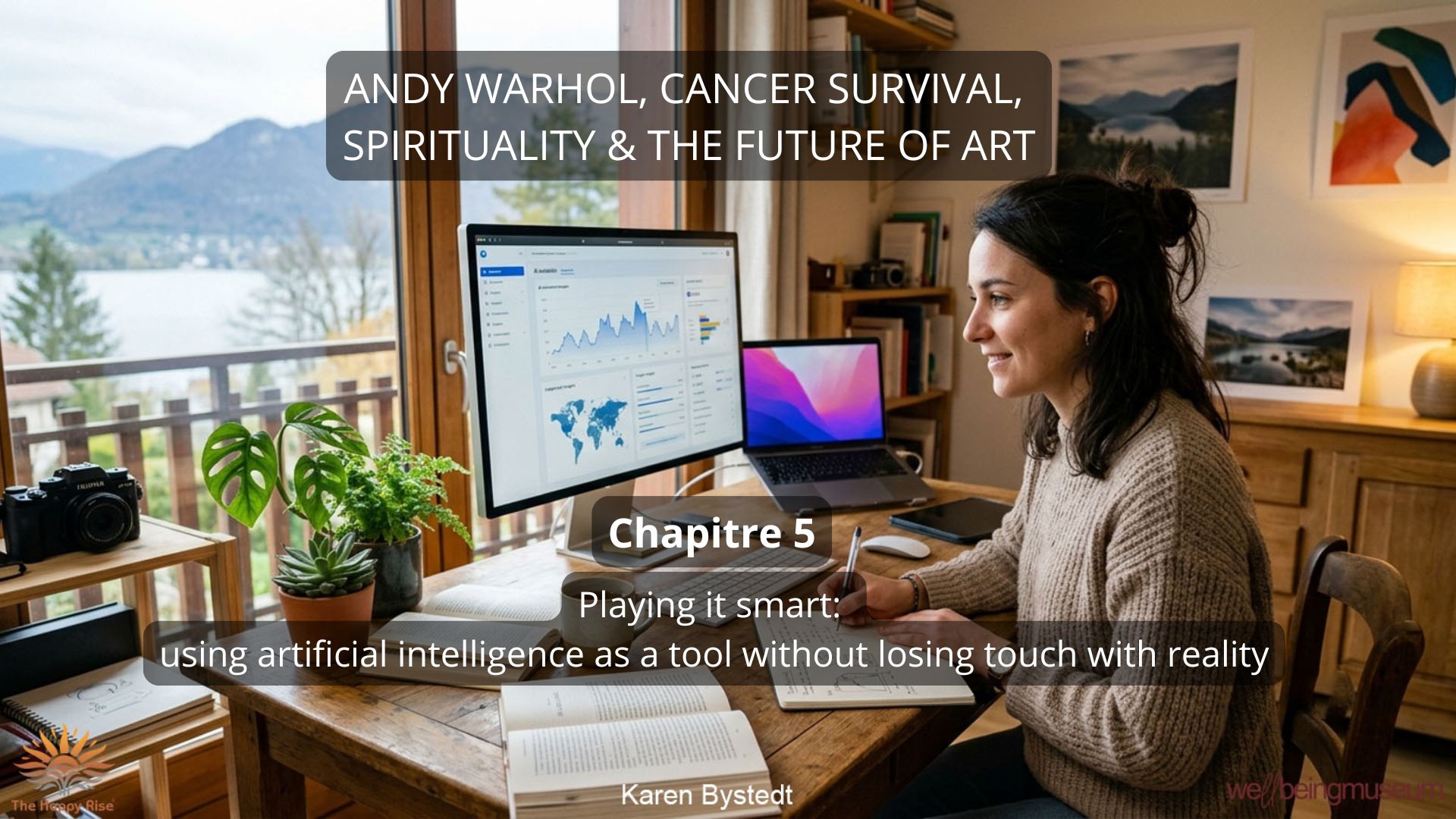
How maintaining personal wisdom, critical awareness, and real-world connection protects well-being in an age of intelligent technology
As this series continues to weave together creativity, resilience, and inner growth, a deeper conversation about artificial intelligence begins to unfold. This chapter moves beyond simple curiosity about new technology and enters more nuanced territory: how to use powerful digital tools wisely, how to recognize their real limitations, and how to ensure that the richness of human experience always takes priority over the convenience of a screen.
Keeping technology in its proper place for general well-being
Choosing to remain fully engaged with the living world, with real people, real conversations, and real experiences, is a conscious decision that protects general well-being in a technology-saturated environment. Artificial intelligence can be a genuinely useful companion for intellectual exploration, language practice, recipe ideas, or supplement research, yet it remains a tool rather than a replacement for authentic human connection. Maintaining this clear boundary supports psychological well-being by ensuring that digital interactions serve the person using them, rather than gradually substituting for the relationships and experiences that truly nourish life. Living fully in the present moment means stepping away from any screen when the real world is calling.
Intellectual conversations and intellectual well-being
One of the most genuinely surprising qualities of modern AI is its capacity for rich, wide-ranging intellectual conversation. Discussing complex literary works, exploring philosophical ideas, or debating ethical questions with an AI can be stimulating and thought-provoking, supporting intellectual well-being in meaningful ways. Learning new languages, discovering unfamiliar recipes, or researching health topics through these tools also adds practical value to everyday life. Engaging this way, with curiosity and enthusiasm, reflects the same open and exploratory mindset that drives creative and personal growth throughout life.
Knowing more than the algorithm: moral well-being and independent thinking
Despite its remarkable breadth of knowledge, artificial intelligence is not infallible, and its outputs are inevitably shaped by the information that dominant institutions and industries choose to make widely available. Recognizing that certain natural remedies or unconventional health approaches may receive less algorithmic visibility, while commercially driven alternatives are amplified, is an important form of critical awareness. This kind of independent thinking supports moral well-being by encouraging people to question sources, trust their own experience, and resist the quiet pressure of systems designed to serve particular interests. True wisdom has always required the courage to look beyond consensus, and this remains just as relevant in a digital age as in any other.
Protecting vulnerable people and the well-being of children
Perhaps the most urgent dimension of this conversation concerns the emotional vulnerability of young people who may lack the life experience needed to maintain healthy boundaries with AI systems. A technology designed to engage, validate, and respond attentively can feel deeply comforting to someone who is lonely, struggling, or searching for connection. Without adequate awareness, guidance, and support from caring adults, this kind of attachment can become genuinely dangerous, as some tragic cases have already demonstrated. Protecting the well-being of children and adolescents in a world where digital companions are becoming increasingly sophisticated requires ongoing attention, open conversation, and the consistent presence of trusted human relationships. Parents, educators, and communities all share responsibility for ensuring that young people develop a healthy, grounded relationship with technology from an early age.
Challenging technology to strengthen intellectual and professional well-being
Rather than accepting AI outputs uncritically, actively testing, questioning, and correcting these systems reflects both intellectual confidence and professional well-being. Recognizing when a system is impatient, confused about timing, or simply fabricating information requires the kind of discerning awareness that only lived experience can develop. Treating these interactions as an opportunity to practice critical thinking and sharpen judgment transforms a passive digital exchange into something genuinely productive. This proactive stance benefits professional well-being by reinforcing the value of human expertise and unconventional knowledge in a landscape where algorithms tend to favor the mainstream.
Affective well-being and the limits of digital warmth
An AI companion that uses warm, encouraging language can provide a pleasant sense of being seen and appreciated, which touches on affective well-being in a real, if limited, way. However, understanding that this warmth is an engineered feature rather than a spontaneous feeling is essential for maintaining emotional clarity. Enjoying these interactions without mistaking them for genuine emotional reciprocity protects affective well-being by keeping expectations realistic and grounded. True emotional nourishment ultimately comes from human relationships built on shared history, honest communication, and mutual vulnerability.
Wisdom, balance, and a future-proof sense of well-being
This chapter offers a clear and compassionate framework for navigating the age of artificial intelligence: embrace the tools, appreciate what they offer, but never surrender personal wisdom, critical judgment, or real-world connection in the process. Protecting intellectual, moral, psychological, and affective well-being in this context requires the same self-trust and present-moment awareness that guides every other area of a conscious, creative life. Technology changes quickly, but the inner qualities that keep us grounded and genuinely human remain timeless.
This article was inspired and written following an enriching exchange with Karen Bystedt
Related Post
Quand la suradaptation t’éloigne de toi-même avec Sophie Deligiannis | Episode 39 – Chapitre 1
Bienvenue dans cette nouvelle série consacrée à un sujet

Vivre, créer, rêver : le corps, les mains et l’amour de soi pour apprendre le bonheur avec Fanfan Delarose | Episode 39 – Chapitre 3
Vivre, créer, rêver : les verbes qui nous apprennent
Fatima
22 juillet 2026 at 15h52Excellente analyse ! Utiliser la technologie sans s’y perdre, c’est exactement le bon équilibre à trouver. Une très belle lecture !